
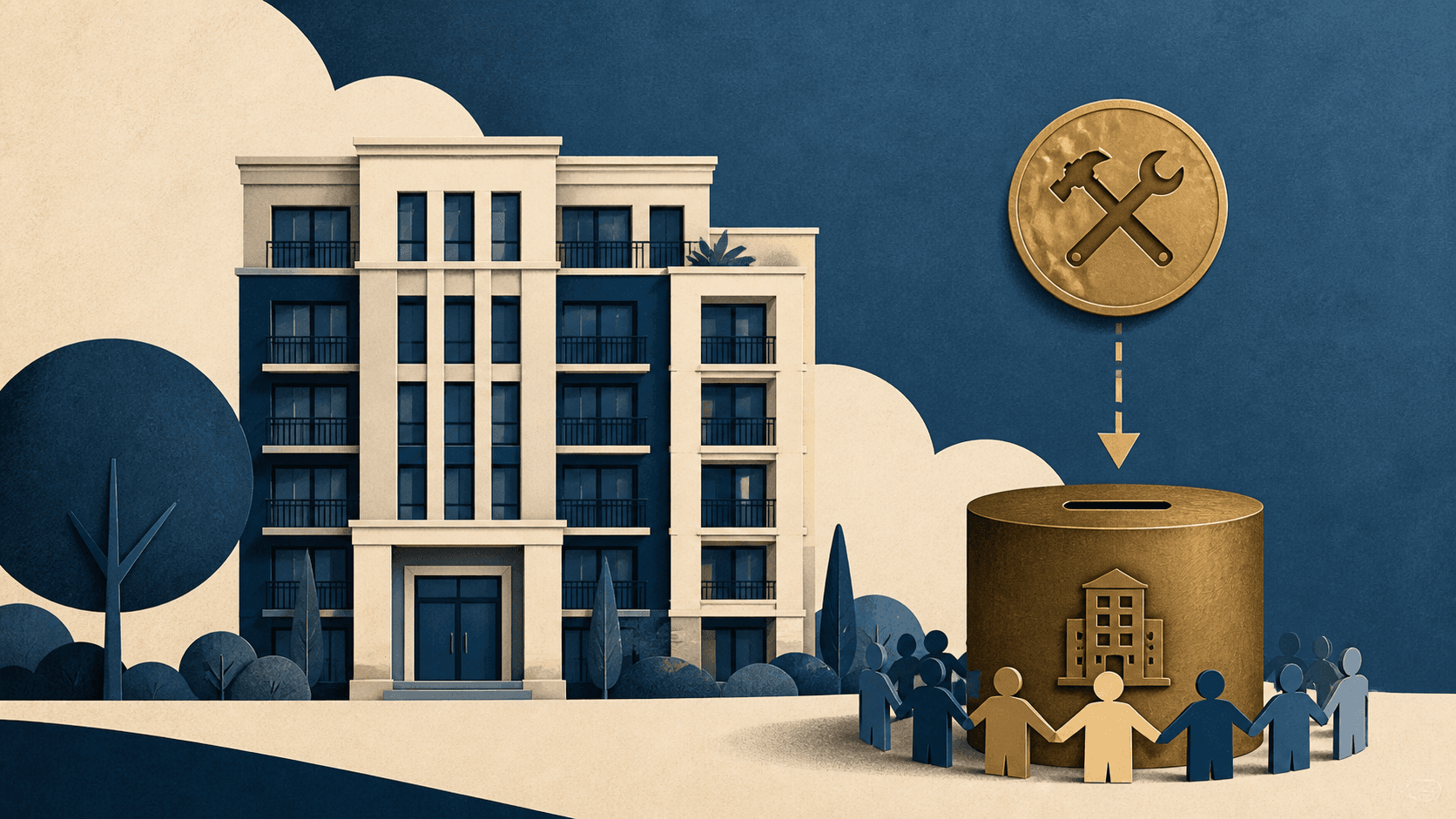
When you buy a condo, you own your unit and share the rest of the building with your neighbors. Everyone helps pay for the roof, hallways, pipes, elevator, garage, yard, insurance, and other shared parts. The monthly condo fee pays today’s bills. The building’s savings pay for tomorrow’s big repairs. If those savings are too small, owners may get a second bill called a special assessment. That is why the cheapest monthly fee is not always the best deal.
Your Fee Keeps the Shared Parts Running
The fee may pay for water, trash, cleaning, yard work, snow removal, building insurance, staff, security, and normal repairs. What it covers changes from one building to the next. A $600 fee that includes heat, water, a front desk, and a garage may be a better deal than a $350 fee that covers almost nothing.
Ask for a plain list of what is included. Then add the things you will still pay on your own, such as electricity, internet, parking, and insurance for the inside of your unit. Compare the full monthly cost, not just the fee.
The Reserve Fund Is the Building's Rainy-Day Money
A good condo saves part of every monthly fee for big work that comes later. That savings is called the reserve fund. It helps pay for a new roof, elevator work, pipes, windows, the outside walls, or a garage repair.
A building with very low fees may be saving too little. That can feel cheap today and become expensive later. Ask for the current reserve balance and the reserve study, if one exists. The study is a long-term list of the building’s big parts, how long they may last, and what they may cost to replace.
A Special Assessment Is an Extra Bill
When the building needs work and does not have enough saved, the condo can charge each owner extra. That charge is a special assessment. It may be one payment or many payments spread over time.
Do not ask only whether an assessment exists today. Ask whether one is being talked about. Read recent meeting notes for words like roof, leaks, garage, balcony, elevator, insurance, engineer, lawsuit, or major repair. A plan that has not been voted on yet can still become your bill after you buy.
The Whole Building Can Affect Your Loan
A lender does not look only at your unit. It may also review the building’s money, insurance, repairs, lawsuits, unpaid fees, and the number of units owned by one person or company. Serious building problems can make a loan harder to get, even when your income and credit are strong.
Ask your lender to review the condo early. Do not wait until the week before closing. A pretty unit in a building that cannot be financed is not a bargain.
Read These Papers Before You Say Yes
Condo papers are not fun, but they tell the story of the building. Ask for them while you still have time to make a choice.
- The current budget and recent financial statements.
- The reserve balance and reserve study.
- Meeting notes from the past year.
- Current and planned special assessments.
- The building's master insurance summary.
- Rules about renting, pets, parking, moving, and home improvements.
- Any open lawsuit, major repair, or safety report.