
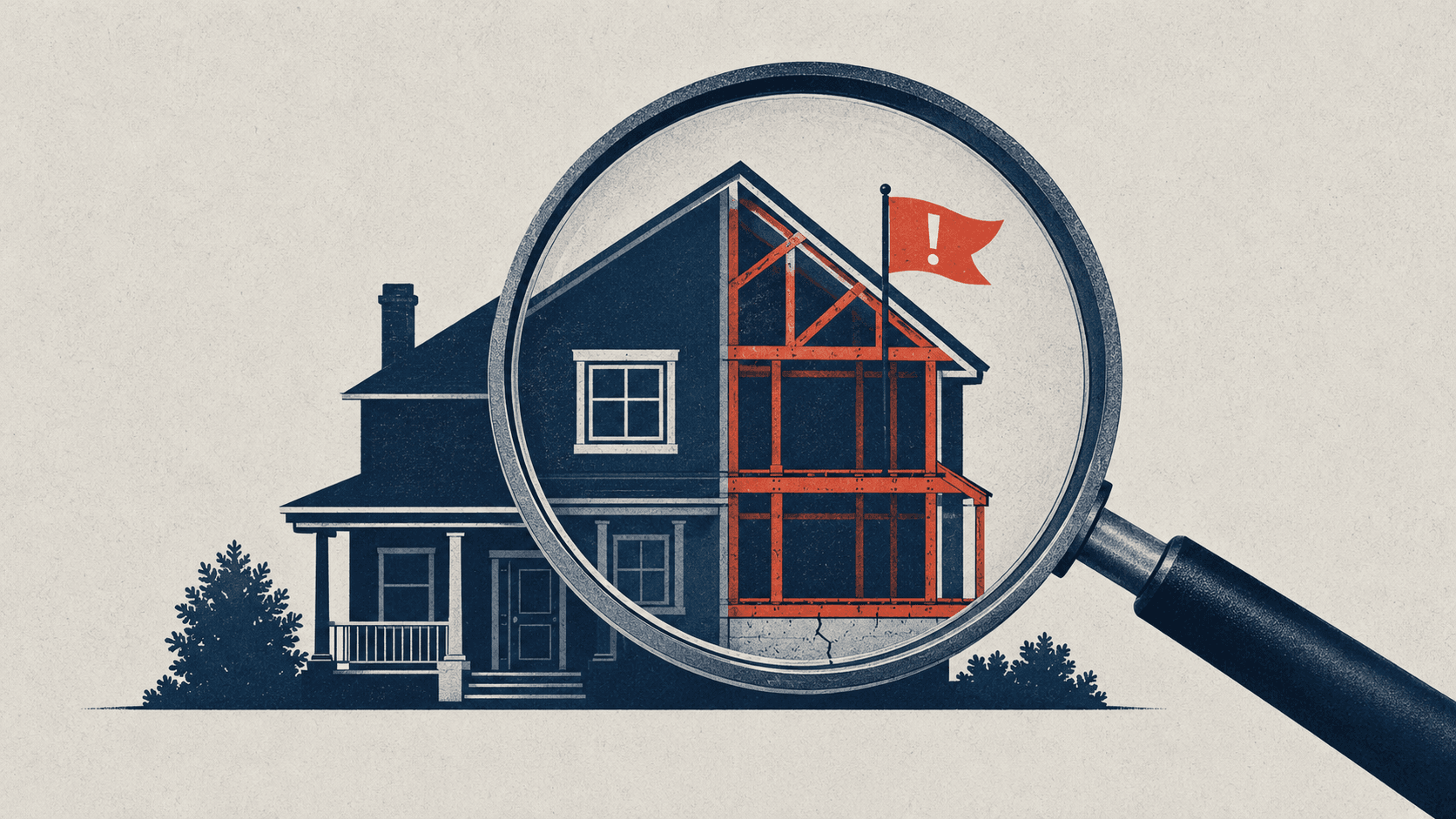
Sellers do not have to point out every flaw, and a well-staged home is designed to win you over. That is exactly why a professional inspection matters: you need someone independent checking what is behind the fresh paint. But you can spot a lot yourself during a normal showing. Some signs are small and fixable. Others are expensive and can change whether the home is worth buying at all. Here is what to watch for, system by system.
Cracks: Which Ones Actually Matter
Almost every house has cracks, and most are harmless. The trick is telling the cosmetic ones from the serious ones. Thin, up-and-down cracks in a concrete wall are common and usually nothing to worry about.
These signs are different. They suggest the structure may be moving, and they are worth paying a structural engineer (not just a regular inspector) to look at:
- Cracks that run sideways across a basement or block wall.
- Stair-step cracks zig-zagging through brick.
- Basement walls that bow or lean inward.
- Doors that will not latch even though nothing looks warped.
- Floors that noticeably slope when you walk across them.
Water: The Most Common and Costly Problem
Water damage is the number one expensive issue in older homes, and the clues are easy to miss. In the basement, look for a white, chalky residue on the concrete, rust stains, soft or spongy drywall near the floor, and a musty smell, even if you do not see actual mold.
In the attic, check the wooden beams for dark stains and look around the chimney and anywhere pipes or vents pass through the roof. One stain might be an old, fixed leak. Water showing up in several different spots usually means a bigger, ongoing drainage problem, which is far more expensive to solve.
Old Wiring: A Hidden Fire and Insurance Risk
In homes built before about 1970, the electrical system can be a serious problem. Two things to ask about by name: "knob-and-tube" wiring (an old cloth-covered type) and electrical panels made by Federal Pacific or Zinsco. All three have a history of failing, and many insurance companies will not cover a home that has them.
This is not a minor note for the inspection report. It can stop you from getting home insurance, and rewiring a typical house can run $15,000 to $40,000. If a home has it, treat that cost as money off your offer, or a reason to keep looking.
Pipes: What They Are Made of Changes Everything
Two pipe problems are worth checking. Old galvanized steel supply pipes (they look dull gray) slowly rust shut from the inside over the decades, which weakens water pressure and adds rust to your water.
The bigger one is the line that brings water from the street into the house. In many homes built before the late 1980s, that line is made of lead. The water utility may replace its part, but you usually own (and pay for) the part on your property. Ask for a plumbing check that includes a camera run down the main sewer line to the street, which can reveal tree roots, broken joints, or a collapsed pipe before they become your emergency.
Work Done Without Permits Becomes Your Problem
A finished basement, an added deck, a converted garage, an extra bathroom: these are great, unless they were built without the proper permits. Buying unpermitted work is not illegal, but the headache transfers to you.
When you later refinance or sell, the bank's appraiser will only count the permitted square footage, so you may not get credit for that finished basement. And if the work does not meet code, the city can make you fix it or tear it out at your own cost. Before you make an offer, look up the home's permit history (most cities and counties have an online portal or a building department that will tell you). If what you see in the house does not match what was permitted, that is something to negotiate.