
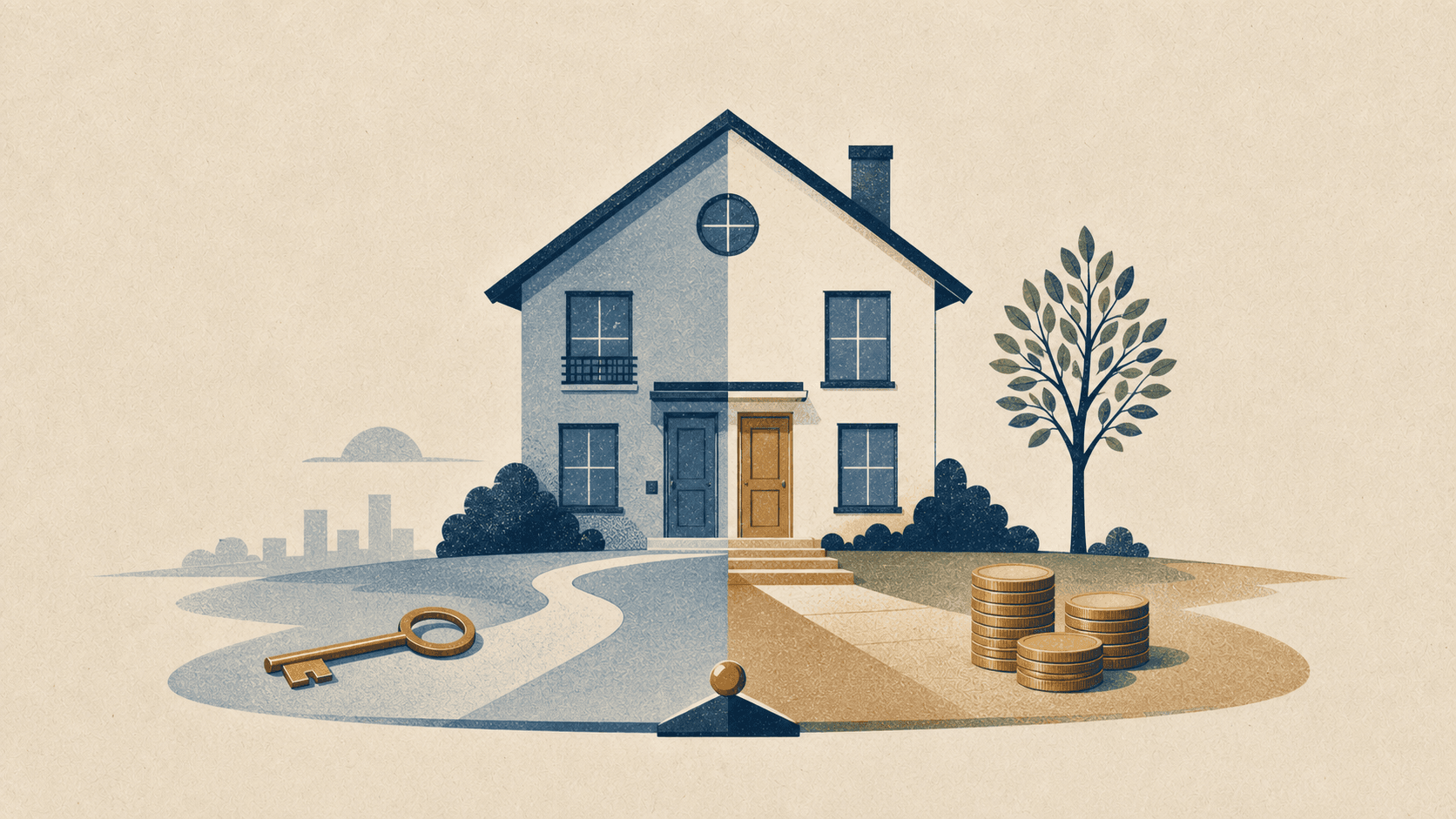
You have probably heard both speeches. One says rent is money you never see again. The other says a house is a money pit and renters are the free ones. Both speeches skip the part that matters: the answer depends on your numbers and your timeline, not on a slogan. Here is how to run the comparison honestly, including the costs each side conveniently forgets to mention.
The Five-Year Rule of Thumb
Buying has big one-time costs on the way in (closing costs, moving, furnishing) and on the way out (agent commission, transfer taxes). Those costs usually add up to 8% to 10% of the home's price, and it takes time for the home's value to grow past them.
That is why five years is the common breakeven. If you are confident you will stay put for five years or more, buying usually wins. If you might move in two years for a job, a relationship, or just restlessness, renting is often the cheaper choice even when the monthly rent looks higher than a mortgage payment.
Compare the Full Monthly Cost, Not Rent Versus Mortgage
The classic mistake is comparing your rent to a mortgage payment and calling it a day. A homeowner pays much more than the mortgage. Add these up before you compare:
- Property taxes — often $300 to $800 a month depending on the county.
- Homeowners insurance, which costs more than renters insurance.
- Repairs and upkeep — plan on about 1% of the home's value per year.
- HOA or condo fees, if the building has them.
- Mortgage insurance, if you put down less than 20%.
What Renting Actually Buys You
Rent is not wasted money. It buys you a place to live, and it buys you flexibility, which has real value. A renter can chase a better job in another city with 60 days' notice. A renter's water heater dies and it is the landlord's problem, not a $2,000 surprise.
Renting also frees up cash. If the monthly cost of owning would be $1,000 more than your rent, and you actually save or invest that difference, renting can build wealth too. The honest catch: most people do not invest the difference. They spend it. Owning works for many families because the mortgage forces them to build equity whether they feel disciplined that month or not.
What Buying Actually Buys You
Owning builds equity two ways at once. Part of every payment pays down your loan, so you owe less each month. And over the long run, homes in most areas rise in value. Neither is fast, but both are steady, and together they are how most middle-class wealth in this country has been built.
Owning also locks in your biggest cost. A fixed mortgage payment is the same in year ten as in year one, while rent almost never goes down. And the home is yours to change: paint it, fence the yard, get the dog. Just do not count on quick appreciation. In any single year, prices can dip. Over ten years, they rarely do.
The Four Questions That Settle It
Skip the national debate and answer these for yourself:
- Will I realistically stay in this area five years or more?
- Can I cover the down payment and closing costs without emptying my emergency fund?
- Is my income steady enough to carry the full monthly cost of owning, not just the mortgage?
- Would owning stop me from something that matters more right now, like starting a business or moving for a career?