
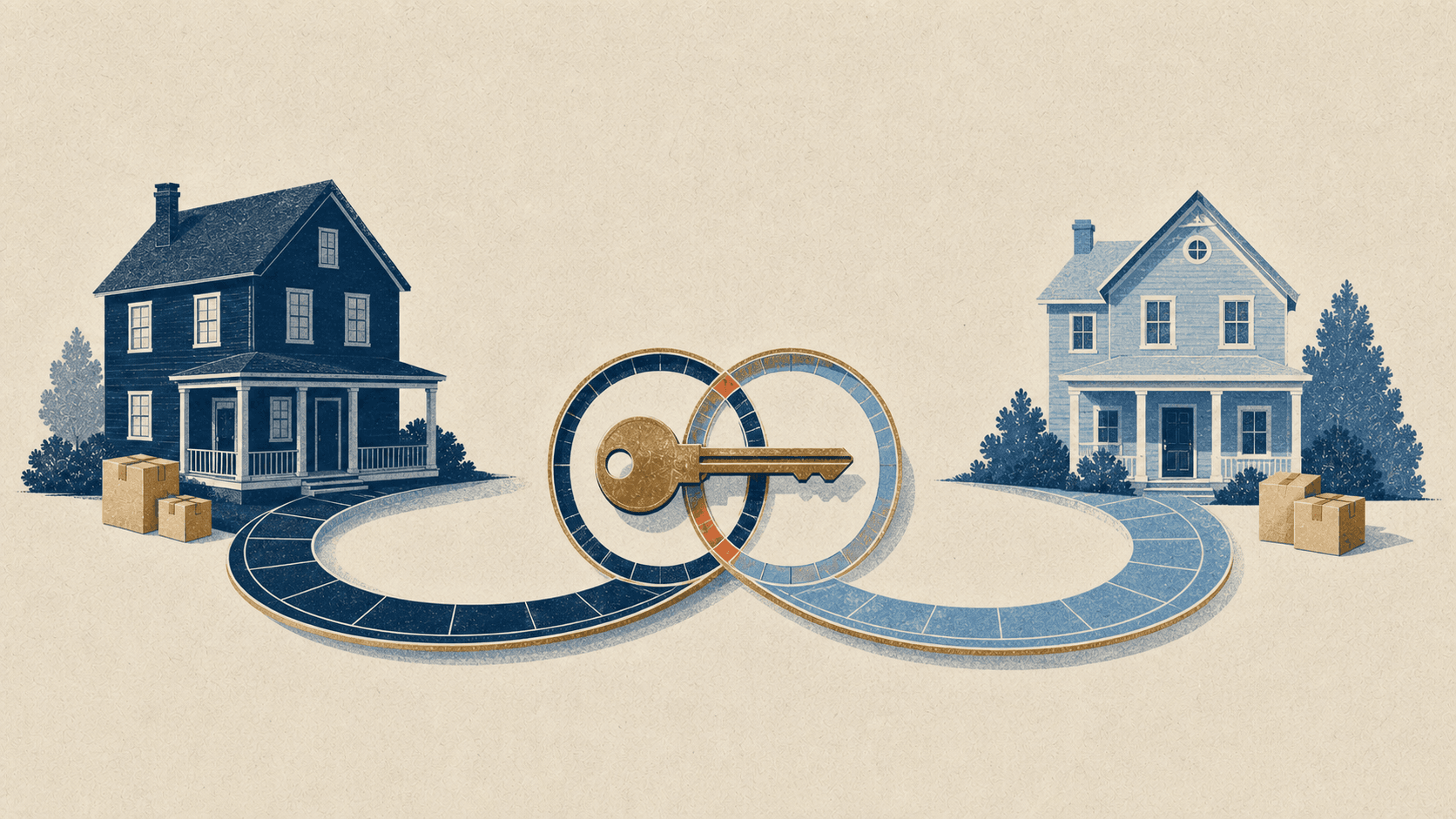
Selling one home and buying another at the same time is the most common hard problem in residential real estate. The money for the next house is locked inside the current one, and the two deals rarely want to close on the same day. Get the order wrong one way and you own two homes with two payments. Get it wrong the other way and you are living in a moving truck. The good news: this problem is so common that the industry built tools for every version of it. Here is how each one works.
First Decide: Sell First, or Buy First?
Selling first is the safe order. You know exactly how much money you have, your offer on the next home is strong because it does not depend on a sale, and you will never carry two mortgages. The risk is the gap: if you have not found the next home yet, you may need somewhere to live in between.
Buying first means you move once and never scramble, but you carry two payments until the old home sells, and your lender must approve you holding both loans at once. In a slow market, that gap can stretch for months. Most families, most of the time, are better off selling first and managing the gap with the tools below.
The Sale Contingency: Making One Deal Depend on the Other
You can write an offer on a new home that only becomes final if your current home sells. This is called a home sale contingency, and it is the no-two-mortgages safety net: if your buyer falls through, you can back out of the purchase and keep your deposit.
The cost is competitiveness. To a seller, your contingent offer is weaker than a clean one, because their deal now depends on a stranger's deal. In a hot market, sellers with multiple offers often skip contingent buyers entirely. It works best when your home is already under contract, when the market is calmer, or when you sweeten the offer elsewhere with price or flexible timing.
The Rent-Back: Sell Now, Move Later
A rent-back (also called a post-settlement occupancy) means you close the sale, get your money, and then stay in the home for a few weeks while paying the new owner rent. It is the cleanest fix for the timing gap: your cash is freed for the next purchase, and you are not moving twice.
Rent-backs of up to 60 days are routine and easy for most buyers to grant, especially buyers who are not in a rush. Agree on the daily rate, a deposit, and who covers utilities in writing before closing. In a competitive sale, offering nothing-in-return flexibility on your move-out date can even attract better offers.
Bridge Loans: Borrowing Across the Gap
A bridge loan is a short-term loan that lets you use the equity trapped in your current home as the down payment on the next one, before the sale closes. It is the buy-first enabler: you win the new home now and repay the bridge when the old home sells, usually within 6 to 12 months.
The honest trade-offs: bridge loans cost more in rate and fees than regular mortgages, you must qualify while carrying both properties, and if your old home sells slowly, the expensive clock keeps ticking. They shine when the right house appears before you are ready, and they sting when used as a substitute for pricing your old home correctly.
Line Up the Closings Like a Relay Handoff
The dream scenario is closing both deals back-to-back: sell in the morning, buy in the afternoon, sleep in the new house that night. It is doable, and settlement teams do it all the time, but it needs deliberate coordination.
A few habits make it work. Put both transactions with the same settlement company or closing attorney if you can, so one team controls both files. Build a few buffer days between the closings rather than stacking them on the same date, and use a short rent-back to cover the buffer. And keep your lender, both agents, and the settlement team talking to each other, because the number one killer of back-to-back closings is a surprise nobody passed along.